
When I set out to explore the wilds of Scotland, I’m often captivated by the rolling hills, mist-shrouded glens, and the patchwork of ancient villages that dot the land throughout the Highlands. The network of trails—like the West Highland Way, the Fife Coastal Path, and the Great Glen Way—winds through landscapes that seem timeless, their beauty belying the tragedies that once unfolded there.
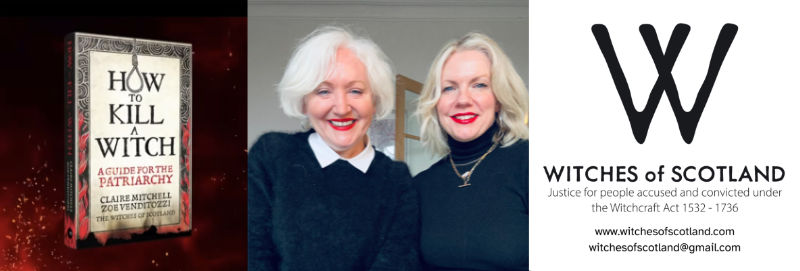
Beneath these tranquil vistas lies a history as dark as the deepest loch—a history that, until recently, was rarely spoken of. In this episode I have the privilege of delving into this hidden past with Claire Mitchell KC and Zoe Venditozzi, co-authors of How to Kill a Witch and founders of the Witches of Scotland campaign.
Their work is not just about history—it’s about justice, memory, and the ongoing fight against misogyny and scapegoating. In this conversation, we break down the main themes and actionable insights, offering a guide for listeners and readers who want to understand, honour, and learn from Scotland’s witch hunt legacy.
As we walk the trails and pass through villages, we are reminded that the landscape itself holds the memory of those who suffered, especially women whose vulnerability was magnified by isolation, poverty, and suspicion.
But history has a habit of repeating itself. Surely accusations of Witchcraft are not a modern day concern? Listen to the episode and judge for yourself if the latest news doesnt include faint echos from 500 years ago.
Do you have ancestors in Scotland accused of witchcraft?
Setting the Scene: Scotland’s Landscape and History (00:00:17) Explores the connection between Scotland’s landscapes and its hidden, often dark, historical consequences.
Introducing the Topic: Witch Hunts in Scotland (00:01:57) Introduces the main topic—Scotland’s witch hunts, the book “How to Kill a Witch,” and the Witches of Scotland campaign.
The Campaign’s Three Objectives (00:03:43) Claire explains the campaign’s goals: pardons, apology, and a national memorial for accused witches.
Understanding Life During the Witch Trials (00:06:05) Describes daily life in Scotland during the witch trials and how hardship and belief shaped society.
Statistics and Record-Keeping of Witch Trials (00:06:42) Zoe discusses population, numbers accused, execution rates, and the challenges of historical records.
Cultural Context: New Year vs. Christmas (00:07:36) Claire explains why New Year is celebrated in Scotland due to the Protestant ban on Christmas.
Religious and Social Control (00:08:29) Zoe describes the power of ministers, church attendance, and the legal, bureaucratic nature of witch accusations.
Mechanics of Accusation and Confession (00:09:45) Explains how accusations arose, the role of scapegoating, and the use of torture and public executions.
Who Was Vulnerable to Accusation? (00:10:48) Discussion on who was most at risk—mainly vulnerable, isolated women, but anyone could be accused.
Confession and the Domino Effect (00:13:04) Describes how confessions under torture led to more accusations, often implicating friends and family.
King James VI and the Witchcraft Act (00:14:26) Explores the role of King James VI, his beliefs, and the legal framework enabling witch hunts.
Demonology and the Impossible Standard of Innocence (00:16:59) Claire discusses James VI’s book “Demonology” and the logic that made innocence impossible to prove.
Why Scotland? The National Obsession (00:17:43) Examines why witch hunts were so intense in Scotland compared to England and other regions.
Walking Through History: The Human Cost (00:18:51) Reflects on the real people affected and the chilling atmosphere of historical witch trials.
The Process: Accusation to Trial (00:19:51) Claire details the process from accusation, confession, and the role of the Privy Council.
The Witch Pricker: Pricking and Evidence (00:22:58) Explains the role of the witch picker, the search for the witch’s mark, and the infamous John Kincaid.
Service Magicians, Fairies, and Regional Differences (00:28:10) Zoe discusses Scotland’s belief in magic, service magicians, and why accusations were less common in the Highlands.
Modern Activism and the 2022 Apology (00:30:27) Covers the Witches of Scotland campaign’s achievements, including the 2022 government apology.
Building Community and Remembrance (00:31:56) Claire and Zoe discuss building a community, the importance of remembrance, and the ongoing campaign.
Contemporary Parallels: Witchcraft Accusations Today (00:33:15) Draws parallels between historical witch hunts and modern accusations, especially in politics and social media.
Global Witchcraft Accusations and Modern Examples (00:33:46) Zoe describes ongoing witchcraft accusations in Africa, Asia, and the US, and their social consequences.
The Persistence of Fear and Misogyny (00:38:01) Explores how fear, suspicion, and misogyny continue to shape society and women’s rights.
Physical Traces: Graves and Memorials (00:38:51) Zoe recounts the story of Lillias Adie, the only provable grave of an accused witch in Scotland.
Sites of Memory: North Berwick and Dornoch (00:43:39) Claire describes key historical sites: North Berwick (start of trials) and Dornoch (last execution).
Modern Memorials and Reckoning (00:48:29) Discusses the rise of local memorials and the ongoing process of reckoning with Scotland’s witch trial history.
Are You Witches? Clarifying the Campaign (00:49:36) Claire answers the common question about their own identities and clarifies the campaign’s focus.